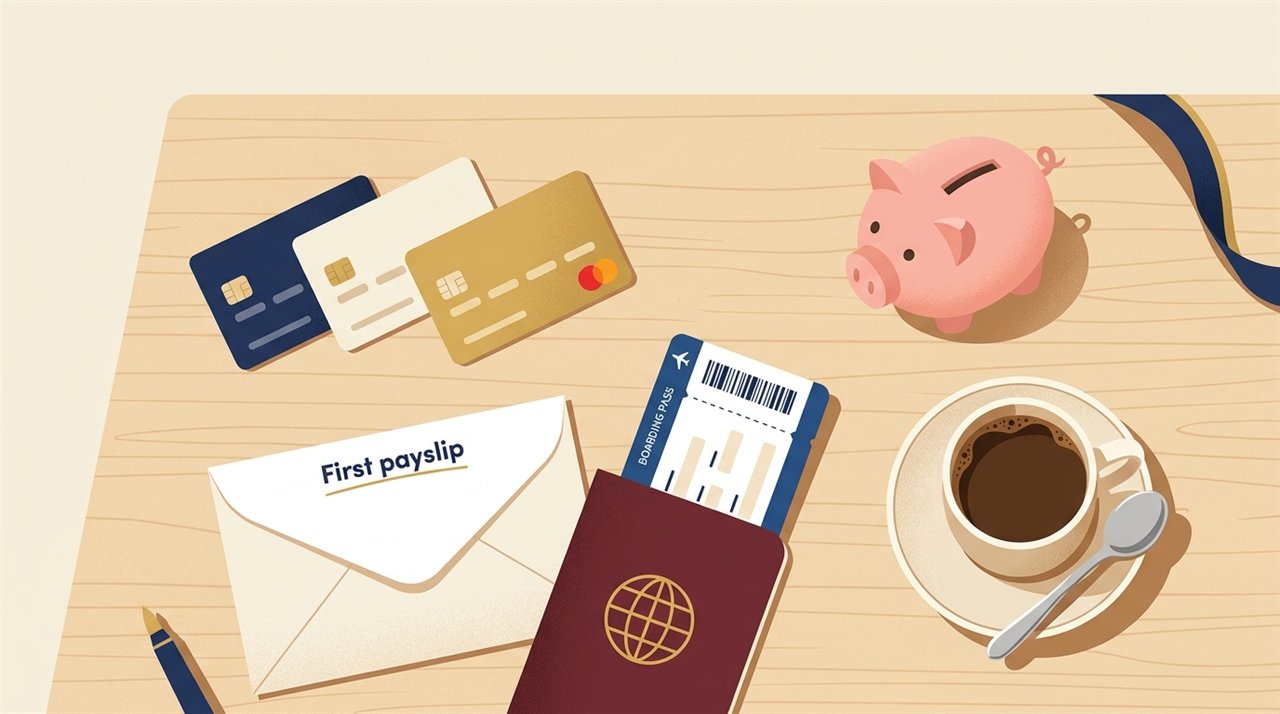
Short answer, since you probably have a tab of card reviews open and a headache: on a first paycheck, I would start with one 4 mpd card (the HSBC Revolution if you hate fees, the Citi Rewards if you want flexible points), put every online and contactless dollar on it, and stop there until you are hitting its cap every month. That single boring move earns more miles than most people’s entire three-card "strategy".
The three cards, side by side
| Card | Annual fee | Miles rate | Monthly cap | Best for |
|---|---|---|---|---|
| HSBC Revolution | S$0 | Up to 4 mpd online + contactless | S$1,000 | Your very first card |
| Citi Rewards | ~S$196, often waived | Up to 4 mpd online + shopping | ~S$1,000 | Flexible points collectors |
| UOB PRVI Miles | ~S$261, waivers | 1.4 mpd on everything local | None | Spend beyond the caps |
Miles cards pay you in airline miles instead of cashback. Spend normally, collect miles, then trade them for flights that would cost real money. 4 mpd means S$1 of spend earns 4 miles, and a good economy redemption values each mile at roughly 1.5 to 2 cents. That is like a 6 to 8 percent rebate, paid in travel.
Can a fresh grad even get a miles card?
Yes. Almost every entry miles card in Singapore asks for a S$30,000 annual income, which is about S$2,500 a month. Most full-time fresh-grad offers clear that bar. Banks typically want your letter of employment or your first few payslips, so if you just started, apply after your first salary credits. Your first card also starts your credit history, which future-you (the one applying for a home loan) will quietly thank you for.
Which card should be your first?
My rule for a first card: it must earn hard on the spending you already do, and it must be cheap to hold. Here is the order I would go in, and exactly why.
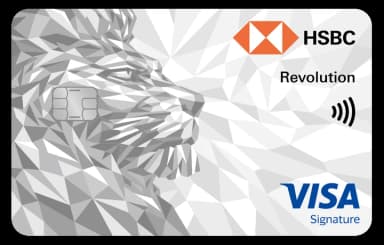
HSBC Revolution
My first pick, and the no-fee starter that earns like a pro card. For a fresh grad, online and contactless spend is basically food delivery, Grab, shopping and almost every tap of your phone. It costs nothing to keep for life. The catch is the cap: past it, the rate drops sharply.
- 4.0 mpd on dining, transport, online shopping, offline shopping and travel, first S$1,000 a month
- 0.4 mpd on everything else
- Up to 8.0 mpd: Requires S$50,000 average daily balance in a sole-name SGD HSBC Everyday Global Account for that calendar month (joint accounts excluded)
Sign-up rewards change often, so confirm the current offer before you apply. New customers only, meaning no card from HSBC in about the last 12 months.
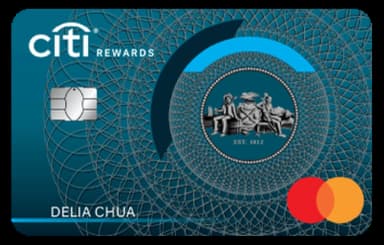
Citi Rewards
The points-pool pick: the same earn engine, a bigger transfer menu. What you gain over the Revolution is that Citi points pool across cards and transfer to a longer list of airline programmes, so your miles are not married to one airline. The catch is the annual fee (often waived the first year, so ask) and an exclusions list that deserves five minutes of your life.
- 4.0 mpd on online spend, travel excluded, first S$1,000 a month
- 0.4 mpd on everything else
Sign-up rewards change often, so confirm the current offer before you apply. New customers only, meaning no card from Citibank in about the last 12 months.
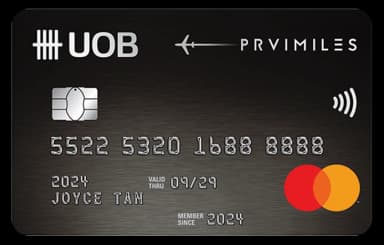
UOB PRVI Miles
The no-cap workhorse, for when your spending outgrows the caps. This is the card for spend that does not fit the bonus boxes: bills, big purchases, the month you furnish a room. Honestly, most fresh grads do not need this on day one. Get it when you regularly blow past the caps on the two above.
- 2.4 mpd on overseas spend, uncapped
- 1.4 mpd on everything else
Sign-up rewards change often, so confirm the current offer before you apply. New customers only, meaning no card from UOB in about the last 12 months.
How do welcome bonuses actually work?
A welcome offer usually pays a chunk of bonus miles for hitting a minimum spend in your first one to three months, and the offers rotate every few weeks. Structurally they all work the same way, so learn the mechanics once:
- The clock starts at approval, not at first use. Know your window before you apply.
- Only qualifying spend counts. Bill payments, insurance premiums, top-ups to wallets and taxes usually do not. Read the exclusions before you count on them.
- Time your application to real spending. Applying just before a trip, a new phone or renewal season makes the minimum spend free. Spending extra just to hit a bonus makes it very expensive.
- One card at a time. Two simultaneous minimum-spend windows on a fresh-grad budget usually means missing both.
A welcome bonus is a reward for spending you were already going to do. The moment it makes you spend money you were not going to spend, the bank won.
How many miles can you realistically earn in year one?
More than you think. Say you spend S$1,600 a month, which is a normal fresh-grad number in Singapore: S$1,000 of it online and contactless on a 4 mpd card, the other S$600 on a 1.4 mpd card or your debit fallback. That is roughly 4,800 miles a month from the bonus card plus 840 from the rest, call it 5,600 miles a month, or about 67,000 in a year before any welcome offer. Depending on award availability, that can be a return economy Saver award to Japan or Korea on KrisFlyer with miles to spare, earned from spending you were doing anyway. Your results will move with your spend mix, and award space is never guaranteed, but the order of magnitude is real.
The mistakes I see every new cardholder make
- Carrying a balance. Card interest in Singapore runs around 27 percent a year. One month of interest wipes out a year of miles. Pay in full, every month, on GIRO, no exceptions.
- Missing the minimum-spend window and getting zero welcome bonus. Set a reminder for the deadline and track your qualifying spend weekly.
- Ignoring the cap. Spending S$2,000 on a card whose bonus stops at S$1,000 leaves half your spend earning almost nothing. When you hit the cap, move the overflow to the next card.
- Collecting cards instead of miles. Four cards on a S$1,600 budget means four caps you cannot fill. One or two cards, used properly, beat a wallet full of plastic.
- Letting points expire. Some bank points have a shelf life of two to three years. Check yours once a year and transfer out before they die.
If you are not sure you can pay in full every single month, you do not need a better card, you need to wait. No mile is worth 27 percent interest. That is not a lecture, it is arithmetic.
How I picked these three
I started collecting miles as a student and these picks follow the same rules I used on my own first setup: high earn on real fresh-grad spending (online, transport, food), low or zero cost to hold, points that transfer to KrisFlyer at minimum, and no card that demands a spending pattern you would have to invent. I hold or have held cards from every bank on this page, and I re-check the rates against the banks' own T&Cs whenever this guide is updated.
Get my first-card playbook
I am turning this guide into a step-by-step email playbook: which card to apply for first, how to hit the welcome offer without overspending, and when to add card two. Join the list and you get it the moment it ships, plus one sharp money read a week.
Free. No spam. Unsubscribe anytime.
Changelog
- 12 Jul 2026: Guide published.
Sources: official card pages and T&Cs from HSBC, Citibank and UOB.Rates, fees and caps correct as of 12 July 2026. This guide shares my personal experience for education, it is not financial advice, and card terms change: always verify with the bank before applying.