The best Singapore Airlines Business Class redemptions, ranked by miles per hour
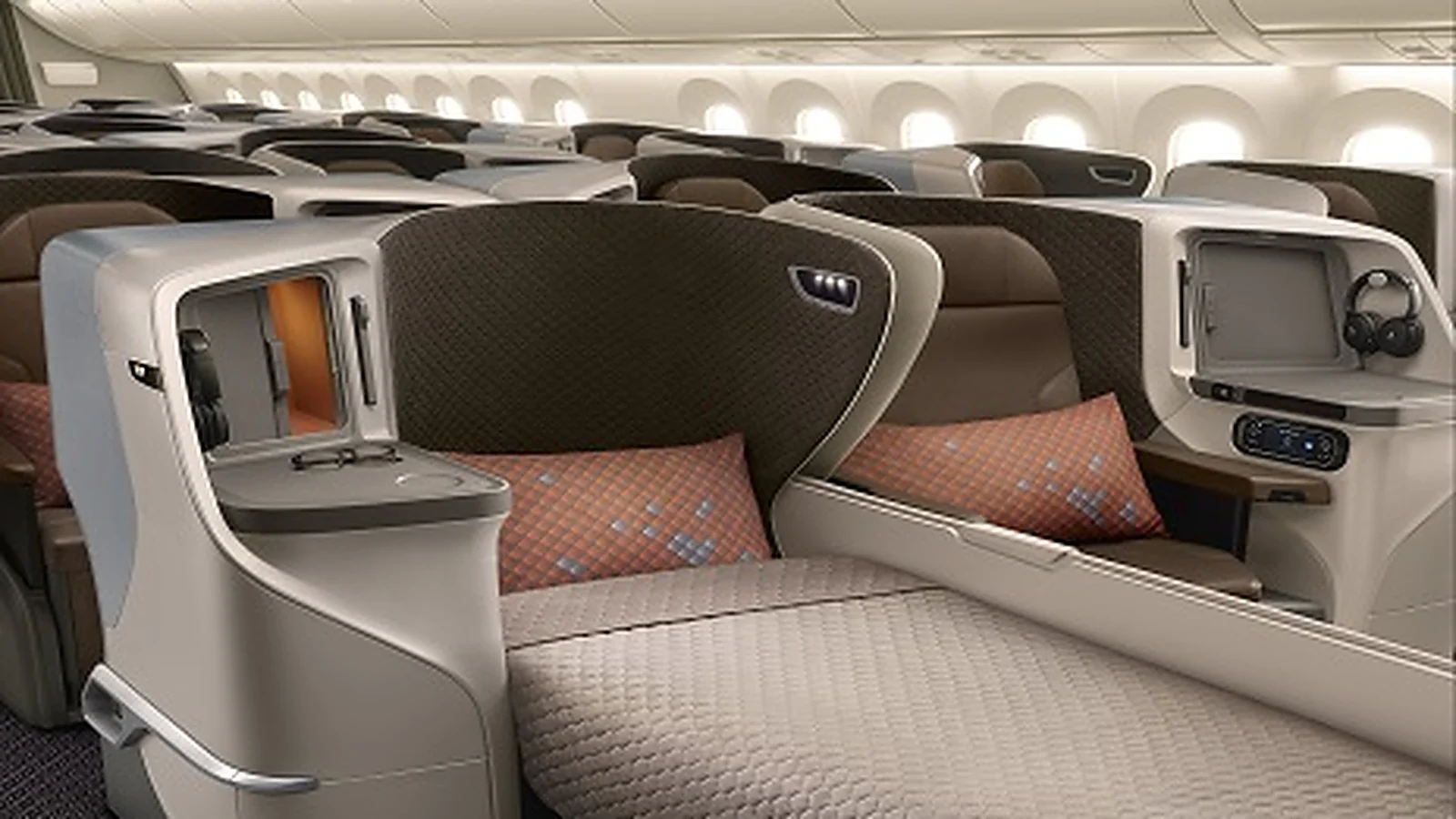
Every mile in your account cost you something to get. Thousands of dollars of ordinary spending, months of it, routed through the right cards on purpose. Which makes it strange how little attention the other end gets: the same balance can buy you wildly different amounts of the thing you were saving for.
A mile has no fixed price. It is worth whatever the redemption you spend it on gives back, and on Singapore Airlines that varies by nearly three times depending only on where you point it. Same cabin, same seat, same champagne. The difference is not the experience you buy, it is how many hours of it you get for the miles you already have.
So this page asks one question of all 29 Business Saver routes out of Changi: what does an hour in that seat actually cost? Rank them by that and the good redemptions separate from the expensive ones immediately, which is the whole point of doing the arithmetic before you transfer rather than after.
Why Saver is the price worth chasing
Every number on this page is a Business Saver award, and that is deliberate rather than convenient. Saver is the cheapest bucket Singapore Airlines sells, and it is the only one where the arithmetic below produces numbers worth chasing.
When Saver space is gone, the same seat is usually still bookable as an Advantage award at a materially higher price. Published estimates of the gap vary, commonly cited at around one and a half times Saver and sometimes more, and it differs by route, so check the actual number rather than assuming. Run it through the division below and the effect is blunt: a route that was a steal at Saver can land a whole band lower at Advantage, without the flight changing at all.
The catch is that Saver seats are rationed. Singapore Airlines releases a small number per flight, often close to a year out, and popular routes on popular dates go quickly. So the table tells you what an hour should cost. It cannot tell you the seat is there.
Book early, stay flexible on dates, and treat this ranking as a shortlist of where to point that flexibility rather than a promise of what is available next month. Chasing a Saver seat on a good route beats settling for an Advantage seat on a mediocre one, almost every time.
How does the Miles Per Hour rule work?
Divide the one-way Business Saver price by the flight time. That gives you the miles you pay for each hour on board. Lower is better: the goal is the least miles for the longest time in the sky.
Lower is better. You are buying hours in a flat bed, so the only question that matters is what each one costs.
The sweet spots: where your miles work hardest
Long flights on modestly priced awards. Cape Town is the standout: 14 hours of business class for 68,000 miles, which is less than some people pay to get to Tokyo and back.
| Rank | Destination | Flight time | Business Saver | Miles per hour |
|---|---|---|---|---|
| 1 | Cape Town | 14h 00m | 68,000 | 4,857 |
| 2 | New York (via Frankfurt) | 22h 30m | 117,000 | 5,200 |
| 3 | Istanbul | 11h 00m | 68,000 | 6,182 |
| 4 | Johannesburg | 10h 40m | 68,000 | 6,375 |
| 5 | New York (direct) | 17h 50m | 117,000 | 6,561 |
The middle of the pack: decent value
Nothing wrong with these. Long-haul Europe and the US sit here, and Bali at 22,000 miles is a lovely low-commitment way to try business class for the first time.
| Rank | Destination | Flight time | Business Saver | Miles per hour |
|---|---|---|---|---|
| 6 | Beijing | 6h 15m | 45,000 | 7,200 |
| 7 | Auckland | 9h 50m | 72,000 | 7,322 |
| 8 | Los Angeles | 15h 10m | 112,500 | 7,418 |
| 9 | London | 14h 20m | 108,500 | 7,570 |
| 10 | Paris | 14h 20m | 108,500 | 7,570 |
| 11 | Taipei | 4h 40m | 35,500 | 7,607 |
| 12 | San Francisco | 14h 40m | 112,500 | 7,670 |
| 13 | Delhi | 5h 50m | 45,000 | 7,714 |
| 14 | Bali | 2h 50m | 22,000 | 7,765 |
| 15 | Amsterdam | 13h 50m | 108,500 | 7,843 |
| 16 | Copenhagen | 13h 45m | 108,500 | 7,891 |
| 17 | Tokyo | 6h 50m | 54,500 | 7,976 |
The bottom of the table: think twice
Short hops price terribly by the hour. Jakarta costs 22,000 miles for under two hours in the seat. You barely finish the meal before descent. If the cash fare is low, which on these routes it usually is, pay cash and save the miles for the top of this page.
| Rank | Destination | Flight time | Business Saver | Miles per hour |
|---|---|---|---|---|
| 18 | Perth | 5h 15m | 42,500 | 8,095 |
| 19 | Mumbai | 5h 30m | 45,000 | 8,182 |
| 20 | Milan | 13h 00m | 108,500 | 8,346 |
| 21 | Shanghai | 5h 15m | 45,000 | 8,571 |
| 22 | Darwin | 4h 50m | 42,500 | 8,793 |
| 23 | Hong Kong | 4h 00m | 35,500 | 8,875 |
| 24 | Osaka | 6h 05m | 54,500 | 8,959 |
| 25 | Sydney | 8h 00m | 72,000 | 9,000 |
| 26 | Melbourne | 7h 25m | 72,000 | 9,708 |
| 27 | Maldives | 4h 35m | 45,000 | 9,818 |
| 28 | Bangkok | 2h 30m | 25,000 | 10,000 |
| 29 | Jakarta | 1h 50m | 22,000 | 12,000 |
Award tickets are not free tickets
Miles cover the fare. They do not cover taxes, fees and carrier-imposed surcharges, which are payable in cash on top and vary by route and departure point. On a long-haul business redemption this commonly runs into the hundreds of dollars, and it is the part people forget when they compare a miles price against a cash fare.
It does not change the ranking, because the cash component is broadly similar whether an hour costs you 4,857 miles or 12,000. It does mean the honest way to read this page is “which route gives me the most hours per mile”, not “which route is free”.
Does this mean I should never fly short-haul business?
No. Miles you cannot bring yourself to spend are worth zero, and a two-hour flat bed after a brutal week has its own value. This table is not a rulebook, it is a price tag per hour, so at least you know what the convenience costs before you pay it.
How do I earn the miles for these redemptions?
Everyday spend, on cards chosen for it. The workhorses in Singapore are the 4 miles per dollar cards: no annual fee, a bonus rate on online spending, dining, transport or contactless, and a monthly cap somewhere around S$1,000. At that rate a Bali Saver is roughly S$5,500 of ordinary spending you were doing anyway.
The catch with all of them is that cap. Past it the same card typically drops to about 0.4 mpd, which is a tenth of what you were earning a transaction earlier, so one 4 mpd card gets you a fraction of the way and then quietly stops. The way people actually reach a long-haul redemption is two or three cards covering different categories, with a flat-rate card underneath catching whatever spills past the caps.
One thing worth knowing before you pick a card for this specifically: not every bank charges the same for KrisFlyer miles. Several price KrisFlyer worse than their other airline partners, so a card advertising 4 miles per dollar can be paying closer to 3.3 if KrisFlyer is always where your points end up. The rate on the front of the card and the rate into this table are not always the same number, and the gap is worth checking before you commit a balance.
At 4 miles per dollar, Bali at 22,000 is about S$5,500 of spending, Cape Town at 68,000 is about S$17,000, and New York direct at 117,000 is about S$29,250. At a flat 1.4 miles per dollar those become roughly S$15,700, S$48,600 and S$83,600, which is the clearest argument on this page for using bonus categories rather than a flat rate.
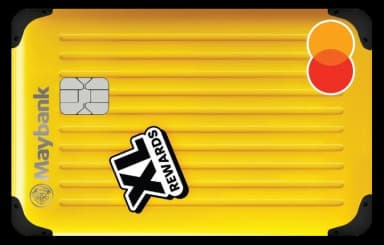 Maybank XL Rewards Card4 mpd into KrisFlyer
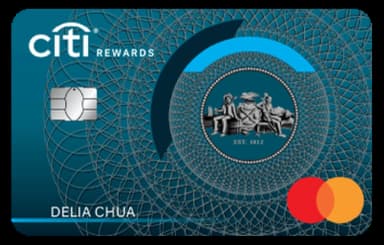 Citi Rewards4 mpd into KrisFlyer
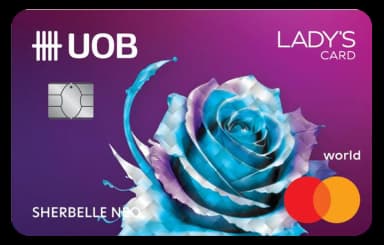 UOB Lady's Card4 mpd into KrisFlyer
 UOB Preferred Visa4 mpd into KrisFlyer
Work out which cards get you there
Put in what you actually spend each month and the Wallet Builder works out which combination of Singapore miles cards earns the most together, caps included, and what to put on each one.
Build my stack →Prices are one way, Business Saver from Singapore, checked July 2026: a return trip is double, and the ranking is unchanged by that. KrisFlyer reprices and flight times shift with schedules, so confirm on singaporeair.com before transferring anything. Saver space is limited and some routes rarely release seats.